
From Vision to Innovation: Brief Background
Transforming Adaptation into Innovation

Charter & Objectives
Emotional Regulation
We transform trauma processing into emotional intelligence, developing powerful coping mechanisms that become leadership strengths. Success is measured not just in emotional well-being metrics, but in the quality of relationships and community bonds our students forge - creating networks of resilience that extend far beyond individual healing.
Conflict Resolution
We equip students with culturally-rooted skills to transmute conflict into opportunity. By integrating traditional wisdom with AI-enhanced understanding, we cultivate peace builders who can navigate complex tensions, measured through their practical impact in reducing community violence and increasing mediated solutions.
Pluralistic Thinking
We nurture minds that instinctively transcend traditional boundaries, cultivating critical thinkers who can analyze challenges through multiple cultural lenses. Their academic excellence is measured not just in scores, but in their ability to synthesize diverse perspectives into novel solutions for our shared global challenges.
Creativity and Innovation
We develop creators who combine emotional intelligence with technological fluency, transforming local challenges into scalable innovations. Their success is measured by the viability of their enterprises and their impact in shaping an AI economy that serves humanity's deepest needs.
This isn't about charity - it's about recognizing that humanity's next great leap requires the wisdom of those who can master radical adaptation. By nurturing their unique capacities with AI literacy and entrepreneurial skills, we're cultivating a new generation of global architects - minds that instinctively transcend the divisions of nationality, ethnicity, and ideology. Their lived experience of both human struggle and human potential positions them to reimagine and rebuild our shared future, turning the wisdom earned through adversity into blueprints for collective flourishing.
- The future of AI must be guided by our full human story, not just the very small minority of billionaire tech CEOs dictating our direction
- Technology's greatest potential lies in healing our deepest wounds
- Our most isolated voices must become our most essential guides
- Peace is not just possible - it is programmable

NOVΔI - a revolutionary platform that serves as both our proof of concept and our first scalable intervention. Through this innovative tool, we aim to create an efficient pathway to prototype, test, and refine our approach while gathering crucial data about the unique challenges and opportunities in supporting conflict-affected youth and marginalized communities through technology. NOVΔI combines educational and creative methodologies into a scalable platform that addresses critical market needs in mental health, AI education, and cross-cultural connection.
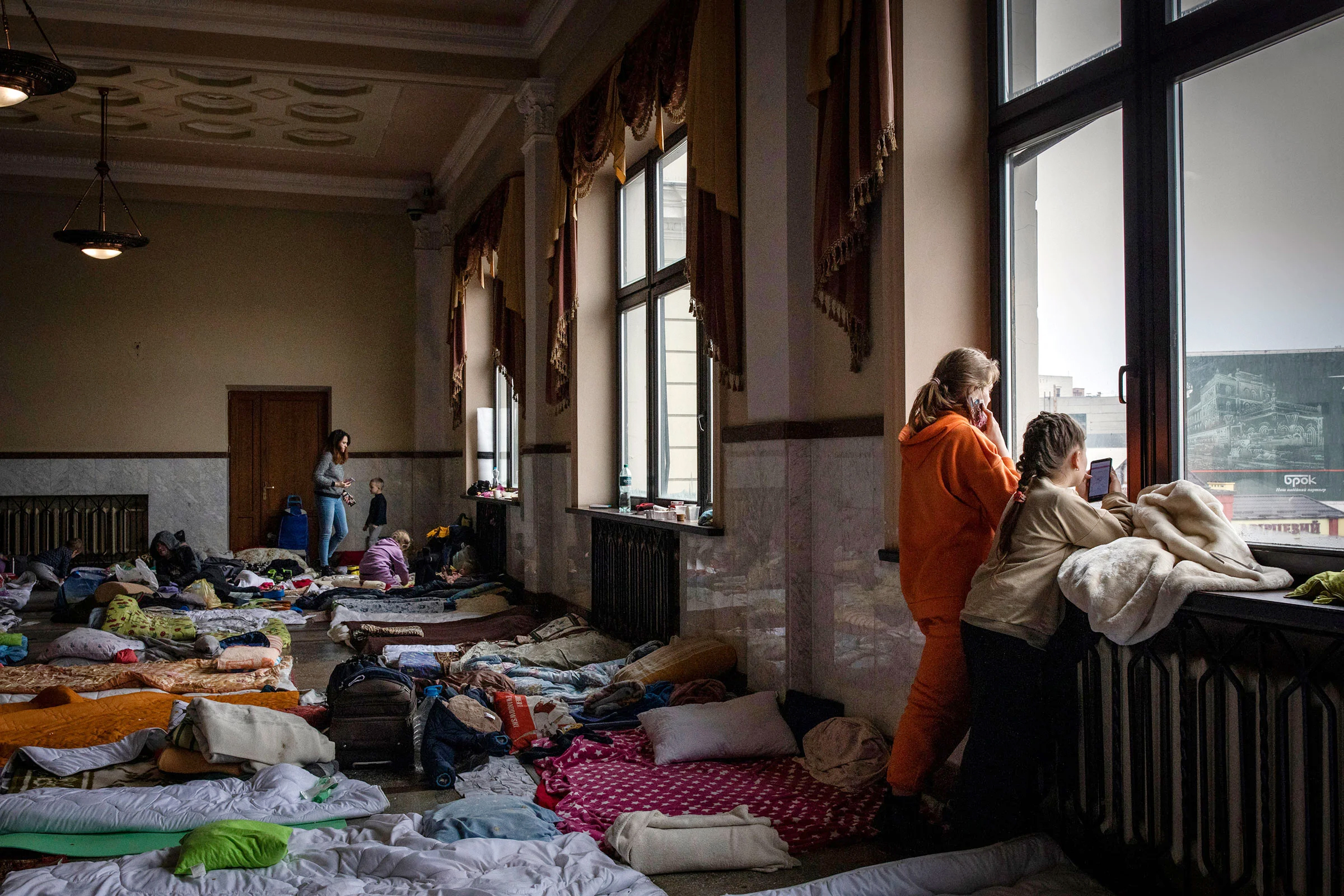
One in every six children now live in a global conflict zone. In a shocking 75 percent increase in the past two decades, there are now more than 350 million children living in conflict impacted areas. More than half of them, 165 million, live in areas with high intensity conflicts and are subject to severe abuses against children, including sexual violence and child soldier recruitment.
Research Substantiation Note:
Current research demonstrates that children in conflict zones exhibit complex patterns of both vulnerability and remarkable adaptation capabilities. McLaughlin et al.'s (2014) conceptual framework distinguishes between "deprivation" and "threat" as distinct dimensions affecting neural development, suggesting that adaptive responses can emerge alongside trauma effects. This aligns with NOVΔI's core premise about the dual nature of war-affected children's experiences. Key supporting findings: Children demonstrate notable resilience factors including social intelligence, agency, and cognitive adaptability (Cortes & Buchanan, 2007) Research shows evidence of "post-traumatic growth" occurring simultaneously with stress responses (Kangaslampi et al., 2022) Social and narrative-based interventions show particular promise in helping process trauma while building on existing strengths (Purgato et al., 2018) Research Limitation Note: While these findings support NOVΔI's conceptual foundation, it should be noted that research specifically examining the positive adaptation capabilities of war-affected youth as a primary focus (rather than as a secondary observation) remains limited. This represents both a limitation and an opportunity for NOVΔI's innovative approach. Development Potential: The research gap in systematically studying and leveraging war-affected children's adaptive capabilities, combined with evidence of their existence, suggests rich potential for NOVΔI's proposed platform to pioneer new understanding in this area while providing practical support through technology-enabled storytelling and connection.
The Paradox That Birthed NOVΔI
The tragedy isn't just in their trauma - it's in our failure to recognize and channel this remarkable neuroplasticity and resilience. What if, instead of seeing them as victims to be saved, we saw them as teachers of survival? What if we could harness their enhanced capacity for adaptation and pair it with the universal human need to tell stories?
This insight collided with my years of experience as a visual storyteller, where I witnessed firsthand how the act of crafting one's narrative transforms trauma into testimony, chaos into meaning. Story-making isn't just therapeutic - it's an act of power, of claiming agency over one's experience.

- Gary Yong, Multidisciplinary Artist & Filmmaker / NOVΔI Architect
We already have the technology.
We have the resources.
We have the capability.
We want to demonstrate:
A Simple Radical Act

Beyond Humanitarian Aid
This is not traditional humanitarian support.
- The complexity of human trauma and healing
- The power of creative storytelling
- The necessity of cross-cultural understanding for preventing future conflicts and de-escalating current ones
- The possibility of connection across seemingly insurmountable divides
Setting the Precedent


UPWARDS DATA
Towards a New Model for Ethical AI Training
What is "Upwards Data"?
In today's digital economy, data extraction has become predominantly exploitative - what we call "Downwards Data." This model harvests personal information without consent mostly to identify consumer vulnerabilities, manipulating human behavior for commercial gain. This approach has created an adversarial relationship between tech companies and users, where we expect our data to be exploited while feeling powerless to prevent it.
However, data by its very nature is not a scarce resource. We generate new data constantly through our lives, choices, and experiences. The perceived "running out" of training data for AI reflects not a natural limitation, but a crisis in the current extractive model. We can't continue taking data without permission or participation from its creators.
Building a Specialized AI Mentor from Real Long-Distance, Intercultural Relationship Wisdom
Model Name: Rice n Jelly
Accessibility Stage: BRIDGE Phase
Focus Areas: Cross-cultural relationship building, creative communication and connection, creative approaches to problem-solving and building high-trust relationships
Base Data: Audio journals, structured interviews, documented problem-solving approaches
Specialization: Intercultural, interfaith, long-distance relationship navigation



VALUE PROPOSITION
Rice n Jelly extends their relationship wisdom brand into the AI economy by licensing their methodologies, experiences, and problem-solving approaches to train specialized AI mentors for NOVΔI's youth platform. This proposed partnership demonstrates how creator brands can participate meaningfully in shaping AI development, receiving infrastructure support to train and create their own proprietary AI models, while maintaining control over their data's use and application.
- Data owners actively license their experiences for specific applications that align with their values
- Continuous collaboration ensures data quality and authentic representation
- Regular updates reflect ongoing learning and evolution
- Transparent tracking of data application and impact
- Revenue sharing from positive applications of data
- Clear ethical boundaries and usage guidelines
- Agency over data use and application
- Developmental support in creating their own AI models
- New revenue streams in AI economy
- Brand extension into future technologies
- Participation in social impact
- Protection of intellectual property
- Ongoing relationship with platform
- High-quality, authenticated data
- Transparency in inherent, organic data biases
- Continuous updates and improvements
- Clear ethical framework
- Trusted partnerships for creator sustainability
- Specialized and diverse expertise
- Verified methodologies


From Tools to Tales to Worlds:
Artist-Led Innovation in the Age of Accessible AI
As AI democratizes creative tools, value is created from technology access at the ground level, cultivated into story wisdom, and ultimately channeled back into world-building creative properties, both through audience data and cultivating high-trust communities.
Artist-led innovations like NOVΔI create living story ecosystems that feed back into expansive narrative universes like ARTifacts of the Future, a worldbuilding IP in development, transforming simplified technology into profound human connection and sustainable creative value.

Beyond NOVΔI: Crafting the Future of Artist-Led Innovation Ecosystems
data into meaning
drives value
Potential Business Models:
I. Story-Tech Ecosystem
- Platform subscription/usage fees
- Content licensing
- Data insights
- Creative tool licensing
- Educational programs
- User-generated content expands universe
- Real stories inform fictional narratives
- Community engagement drives value
- Cross-cultural content creates global appeal
- Youth participation ensures relevance
- Entertainment companies
- Educational institutions
- Cultural organizations
- Corporate training
- Media production
- Real-world story collection (NOVΔI)
- Fictional universe development (ARTifacts)
- Technology platform (AI tools)
- Impact measurement
- Community engagement
- Traditional entertainment revenue
- Story-Based Digital Assets
- Corporate sponsorship
- Educational licensing
- Community marketplace


Partnership Opportunities
Contact: [email protected]
IG: @gary.yong
X: @b4AIyells_cut
Substack:

b4theaiyellscut.substack.com
B4 THE AI YELLS CUT | Gary Yong | Substack
Sharp takes from cinema's frontier, pairing cultural criticism with AI filmmaking educational content to help visual storytellers navigate the AI revolution. Click to read B4 THE AI YELLS CUT, by Gary Yong, a Substack publication. Launched a month ago.
© 2025 EQAI Academy / Artist Venture Productions. All rights reserved.